kavak.run
One frontend kernel. One typed IR. Multiple languages.
Kavak combines a reusable C11 frontend with KIR, a verified typed intermediate representation and a direct WebAssembly emitter.
Visit KavakIndependent systems laboratoryTürkiye · Est. 2025
Compilers, secure communication, operating systems, Unicode infrastructure and independent foundation-model research — developed from first principles and measured against outside authorities.
01 / SELECTED SYSTEMS
Each project stands on its own, but the useful parts travel: Unicode tables feed secure messaging, compiler frontends share a kernel, and browser tools run the same C cores shipped elsewhere.
kavak.run
Kavak combines a reusable C11 frontend with KIR, a verified typed intermediate representation and a direct WebAssembly emitter.
Visit Kavakminiswift.run
A standalone frontend, SSA IR and two independent backends — native C and direct WebAssembly — with no LLVM in the pipeline.
Open MiniSwiftsml.chat
A platform-neutral C core owns post-quantum key agreement, the ratchet, storage, outbox and wire framing across mobile and web clients.
Visit SMLtaios.run
TaiOS boots through QEMU, Apple Hypervisor.framework, UEFI and a Galaxy S9 target, with its own MMU, scheduler, VFS, network stack and 159 syscall entries.
Explore TaiOSt-ai.one
TAI One is an independent language-model program engineered from first principles: one tokenizer, one model, one runtime, one accountable system — with no external model routing anywhere in the path.
Visit T-AI Onellm.istanbul
Forward pass, backward pass, optimizer and KV-cached decode implemented as WGSL compute kernels over WebGPU.
Visit llm.istanbul02 / COMPLETE INDEX
Open any record for scope, measured evidence and the limitations we currently publish. “Not deployed” means exactly that — the code exists, the public service does not.
Compiler platform
kavak.run
Target-independent typed IR plus a reusable C11 frontend kernel, lowering to WebAssembly
Swift compiler
miniswift.run
A Swift compiler in C with two backends: native C, and a direct WebAssembly emitter
Kotlin compiler
minikotlin.run
Kotlin to WASM-GC, built in a browser tab by a compiler that is itself WASM
C# compiler
minisharp.run
C# to WebAssembly in C — no Roslyn, no .NET SDK, no LLVM
Language pilot
minidart.run
A Dart-to-WASM scaffold that exists to prove the kernel carries its weight
Shader frontend
wgsl.run
C99 WGSL frontend: parse, resolve, const-evaluate, type-check, validate, reflect
Unicode infrastructure
decoder.run
C11 Unicode 17.0 library: normalization, segmentation, IDNA and URL parsing
Secure communication
sml.chat
Post-quantum end-to-end encrypted messaging built on a headless C core
Operating system
taios.run
ARM64 kernel from scratch, booting on QEMU, Apple HVF, UEFI and a Galaxy S9
Browser machine learning
llm.istanbul
WebGPU stack for training decoder-only transformers in a browser tab
Foundation model research
t-ai.one
An independent foundation-model program: one tokenizer, one model, one runtime, one accountable system
Code analysis service
code.t-ai.one
Service answering with issue lists and patches instead of chat prose
Answer engine
sengi.surf
Turkish-language answer engine; document retrieval still being built out
Coding agent
tairon.codes
Coding-agent backend, a model router over our own T-AI infrastructure, and a VS Code extension
No record matches that search.
03 / CAPABILITIES
We work below the product surface: parsers, type systems, intermediate representations, cryptographic state machines, schedulers, Unicode algorithms and GPU kernels.
Descriptor-driven lexers, Pratt and recursive-descent parsers, semantic analysis, flow narrowing, typed IRs, verifiers and direct code generation.
Unicode conformance, platform-neutral storage cores, hybrid post-quantum handshakes, ratchets, wire protocols and ARM64 kernel work.
WGSL validation, WebGPU compute, tokenizer kernels, transformer training primitives, optimizer implementations and deterministic fixtures.
Real compilers and systems libraries compiled to WebAssembly, offline-capable studios and neutral host boundaries — not JavaScript interpreters.
04 / STANDING RULES
“We don’t try to be loud. We try to be correct.”
Where understanding matters, we build from scratch. If we cannot read it end to end, we do not pretend to own it.
A test we wrote ourselves only proves that our code agrees with our opinion. Real toolchains and official corpora are the useful oracles.
Every record names what remains partial, stale or unsupported. Limitations are part of the product surface.
A reproducible harness with no headline number is better than a headline number with no harness.
TLabs is self-funded. There are no investor deadlines and no roadmap written to impress a room.
05 / THE LAB
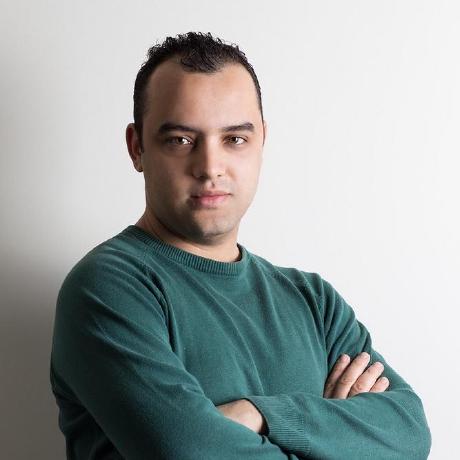
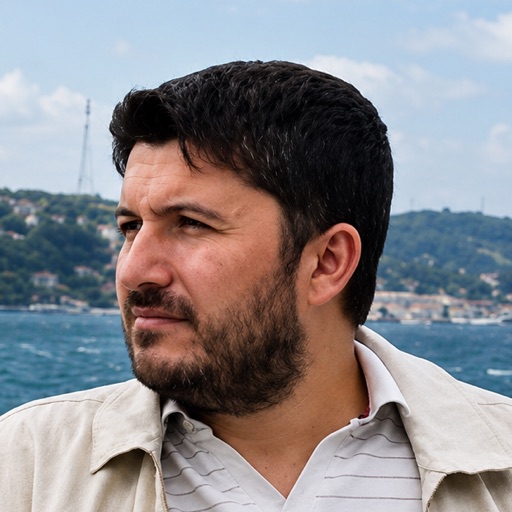
TLabs Technology is an independent two-person systems laboratory founded in Türkiye in 2025.
Engineering & systems architecture
Compilers, operating systems, cryptographic transport, WebAssembly and product engineering.
Mathematical & theoretical foundations
Formal reasoning, mathematical models and the theoretical foundations behind the laboratory’s systems work.
06 / CONTACT
Write to the address that best fits. Direct, technical mail is always easier to answer than a generic pitch.